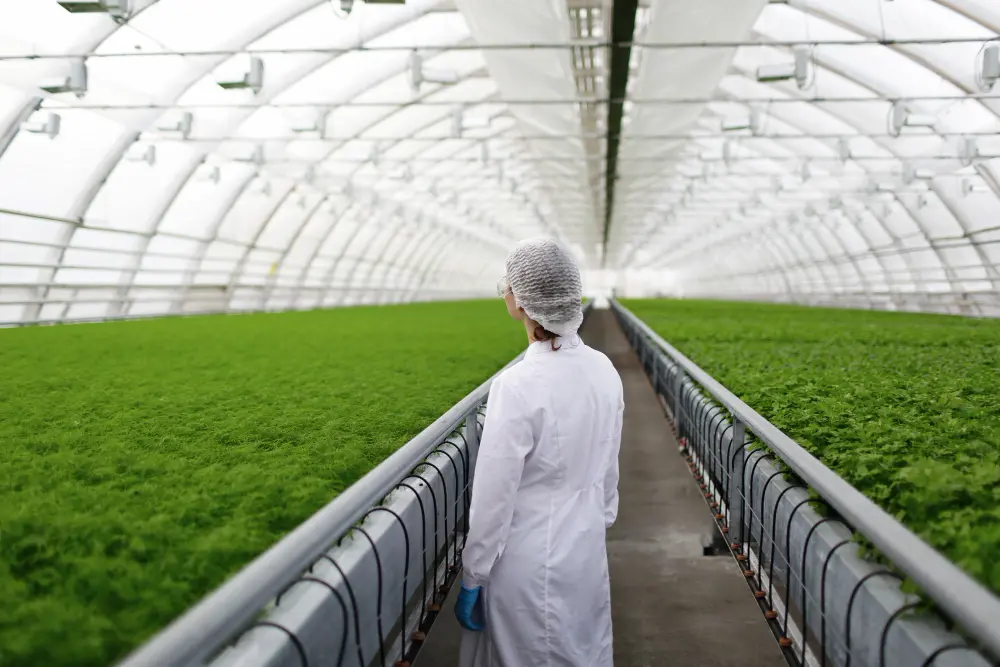
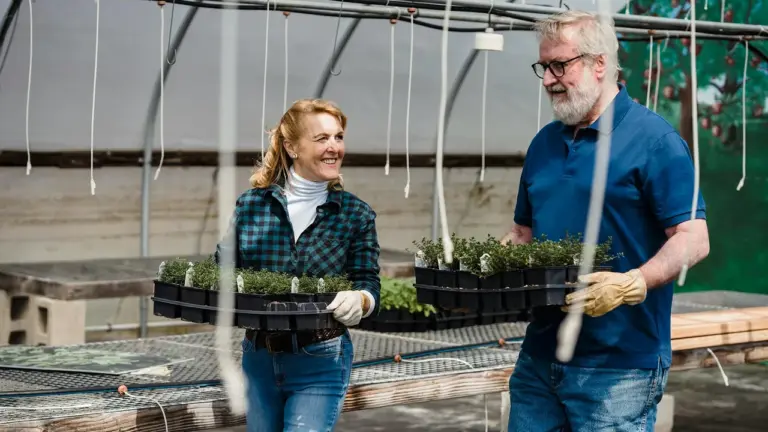
تؤدي هذه التقنية إلى رفع الإنتاج كماً ونوعاً بسبب:
Nutritional Control.
Plants receive precisely formulated nutrient solutions tailored to their growth stage and physiological requirements, eliminating soil-related nutrient deficiencies or toxicities and promoting faster growth and higher yields.
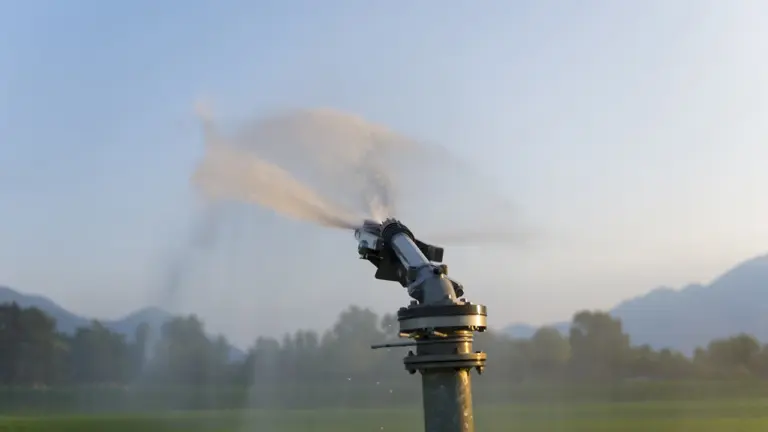
Efficient Water Use. Hydroponic systems can reduce water consumption by approximately 70–90% compared with conventional agriculture through recirculation of nutrient solutions and minimization of evaporation and seepage losses.
Climate Regulation. Temperature, humidity, light intensity, and carbon dioxide concentrations can be controlled within the greenhouse environment, enabling continuous year-round production independent of external climatic conditions.
Reduced Pests and Diseases. The absence of soil significantly decreases the incidence of soil-borne pathogens and root diseases, while the controlled environment reduces pest pressure and the need for chemical pesticides.
High-Value Horticultural Crops
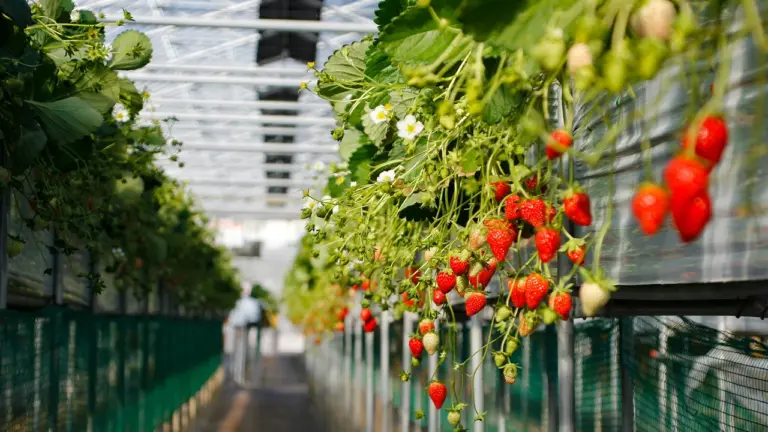
Hydroponic systems are particularly suitable for high-value crops, including cherry tomatoes, cucumbers, sweet peppers, lettuce, leafy greens, strawberries, and medicinal and aromatic herbs, which benefit from controlled growth conditions and consistent quality.
Hydroponic Agriculture in the United Arab Emirates
Hydroponic farming represents a strategic component of food security initiatives in the United Arab Emirates (UAE). The technology enables the production of high-quality horticultural crops using significantly less water—an essential advantage in arid environments. According to the Ministry of Climate Change and Environment, numerous hydroponic farms are distributed across the Emirates, producing key crops such as cucumbers, tomatoes, cherry tomatoes, peppers, lettuce, and strawberries (MOCCAE).
Despite its advantages, hydroponic agriculture faces several challenges, including high capital investment costs, the need for continuous monitoring of nutrient solutions (including pH and salinity), advanced biosecurity requirements, and the demand for skilled technical labor capable of managing complex systems.
The UAE continues to invest in advanced agricultural technologies to increase domestic production, strengthen food supply chains, mitigate climate change impacts, reduce greenhouse gas emissions, and preserve natural resources. These efforts aim to enhance national self-sufficiency and reduce reliance on imported agricultural products.
SACT’s Role in Supporting Hydroponic Agriculture
SACT provides specialized technical consultancy for the design, implementation, and operation of hydroponic greenhouse systems. The company supports investors and farmers in establishing sustainable and economically viable projects, overcoming technical and operational challenges, and achieving optimal productivity and profitability within modern agricultural environments.
SACT offers integrated consultancy solutions that covers:
- Increased production in both quantity and quality through precise environmental and nutritional control
- Significant water savings via advanced recirculation technologies
- Comprehensive climate control for year-round cultivation
- Reduced pest and disease risks in clean, controlled environments
- Enhanced profitability for high-value crops
- Ongoing project support until targeted outcomes are achieved
SACT combines engineering expertise with agricultural knowledge to advise on smart farming solutions that contribute to a sustainable food future.
References
- MOCCAE (Ministry of Climate Change and Environment) (n.d.) Hydroponic agriculture in the UAE. Available at: https://www.moccae.gov.ae
- Sharjah24 (n.d.) Hydroponic farming initiatives in the UAE. Available at: https://sharjah24.ae
Dr. A. A.