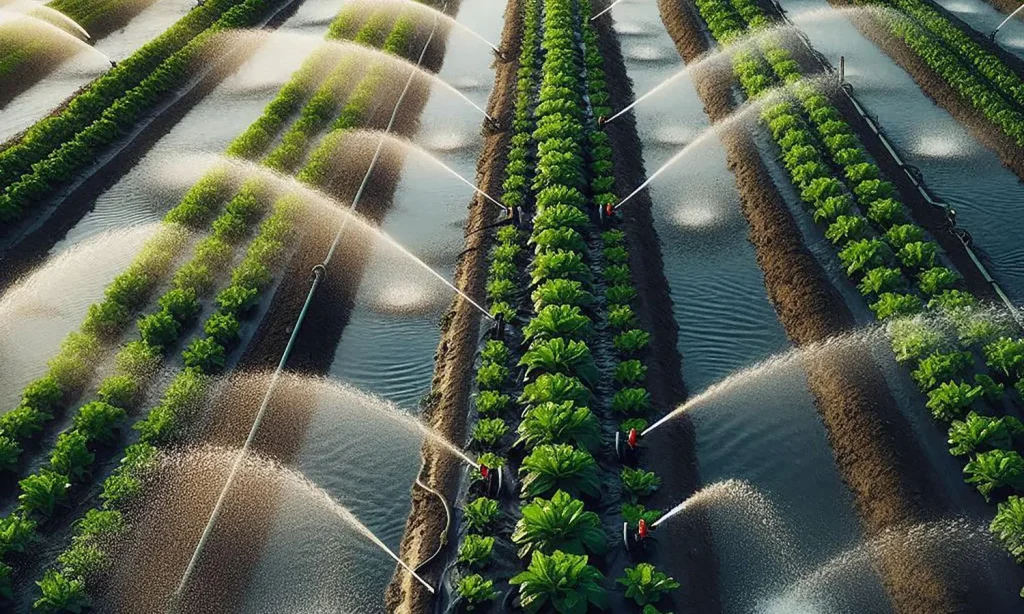
Adopting a profitable agricultural production strategy based on balancing irrigation water conservation with the optimal use of agricultural inputs according to the actual nutritional requirements of cultivated crops constitutes a fundamental pillar for achieving agricultural sustainability and strengthening food security, particularly in arid and semi-arid regions. Water resources are inherently limited, and excessive use of fertilizers and pesticides generates adverse environmental and economic consequences, including soil degradation, contamination of water resources, and increased production costs (FAO, 2021).
This strategy relies on the implementation of modern water management technologies, such as drip irrigation and smart irrigation systems based on environmental sensing and climate monitoring. These approaches ensure efficient delivery of water directly to the root zone while minimizing losses due to evaporation and percolation. Consequently, water-use efficiency is enhanced and crop yield per unit of water is increased—an essential indicator of sustainable agricultural performance (World Bank, 2020).
Achieving high economic returns also requires integrated management of agricultural inputs. Fertilizers and nutrients should be applied in accordance with the crop’s actual requirements at different growth stages, based on soil analysis or nutrient solution assessment in advanced production systems. Such practices improve nutrient uptake efficiency, reduce wastage, and mitigate environmental pollution associated with excessive fertilization (Tilman et al., 2011).
Balancing water management with efficient input use contributes to improved crop quality and increased farmers’ economic returns while safeguarding natural resources for future generations. The scientific literature consistently emphasizes that sustainable resource management in agriculture represents a comprehensive approach integrating productivity, environmental protection, and economic viability.
Accordingly, the adoption of this strategy is essential to ensure the continuity of agricultural production and the achievement of sustainable development under conditions of climate change and resource scarcity.
In this context, specialized agricultural consultancy plays a critical role in translating these principles into effective field implementation. SACT provides integrated advisory services in irrigation management, optimization of agricultural input use, and the design of modern farming systems tailored to crop requirements and local environmental conditions. Leveraging advanced engineering and agricultural expertise supported by data analytics and smart monitoring technologies, SACT delivers customized solutions that enhance productivity, reduce costs, and minimize resource waste. The company also supports agricultural projects throughout all stages—from planning and design to operation and follow-up—ensuring economically viable outcomes within an environmentally sustainable framework.